In the high-performance worlds of engineering such as aerospace, automotive, while static analysis ensures a part can hold its weight, it ignores the chaotic, high-frequency realities of flight turbulence, engine resonance, and road irregularities. To survive, modern components must be designed for the vibration requirement in frequency domain.
Why Frequency and Random Response Optimization are Essential
Relying on traditional manual design methods often leads to "over-engineering", adding bulk to improve strength, which unintentionally shifts the natural frequency into a range that causes resonance or "under-engineering" where the design does not meet the certain criteria such as stiffness or strength.
Directly targeting dynamic response allows engineers to transition from reactive testing to proactive design:
- Frequency Response Function (FRF) Optimization: This allows you to target specific, known excitation frequencies (such as engine RPM or propeller blade pass frequencies) and force the structure to avoid those critical zones. It ensures the part's response amplitude is minimized exactly where it matters most.
- Random Response Optimization: For broadband environments, like a rocket launch or a vehicle traveling over a rough surface, this ensures the part withstands a spectrum of vibration. By optimizing based on Power Spectral Density (PSD) and RMS stress, you target the statistical energy that actually causes fatigue, ensuring the part remains durable throughout its entire service life.
Case Study : Aerospace Engine Bracket
This study evaluates the structural integrity and optimization of a titanium aero-engine bracket under dynamic environments. The first study is performed with additive manufacturing method (the design with static loading and another design with dynamic loading).
Evaluation of dynamic behavior for the design optimized with static loading only
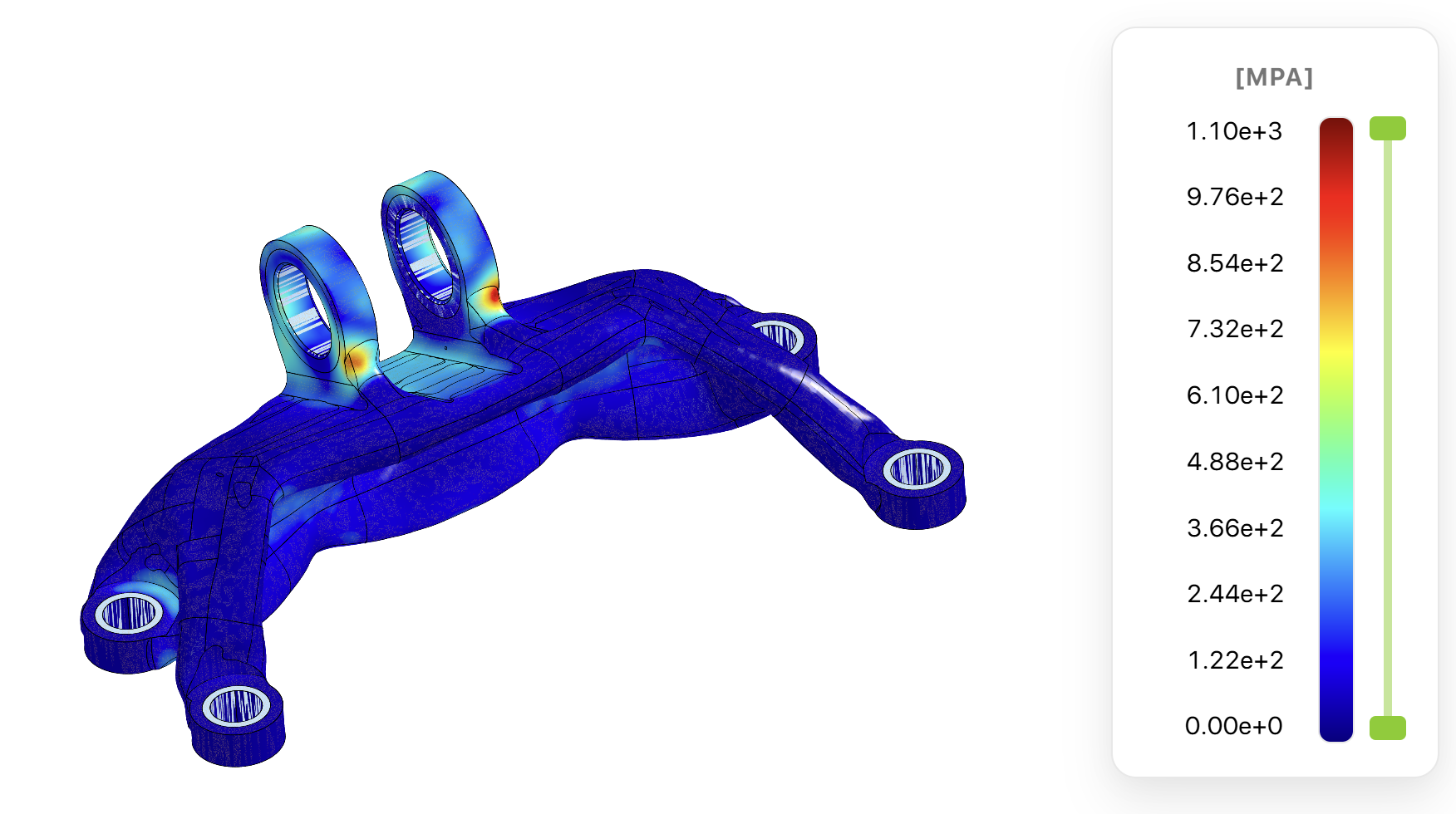
Initially, a baseline design, optimized strictly for static load cases, was subjected to a random vibration response analysis (Fig. 1). The dynamic simulation revealed that the induced stresses exceeded the material's yield strength, demonstrating that static optimization alone is insufficient for high-vibration aerospace environments.
Optimization with Random Response Analysis
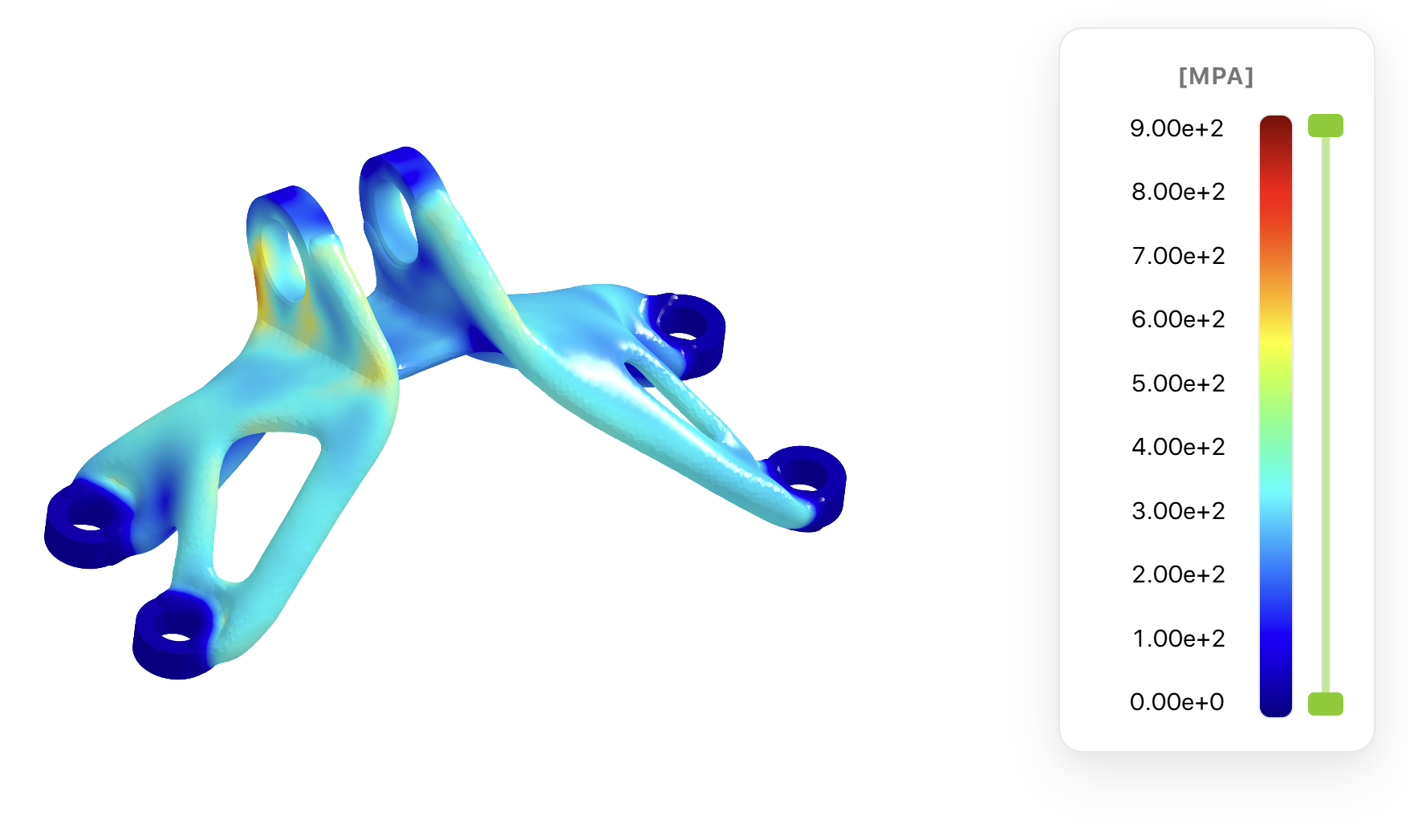
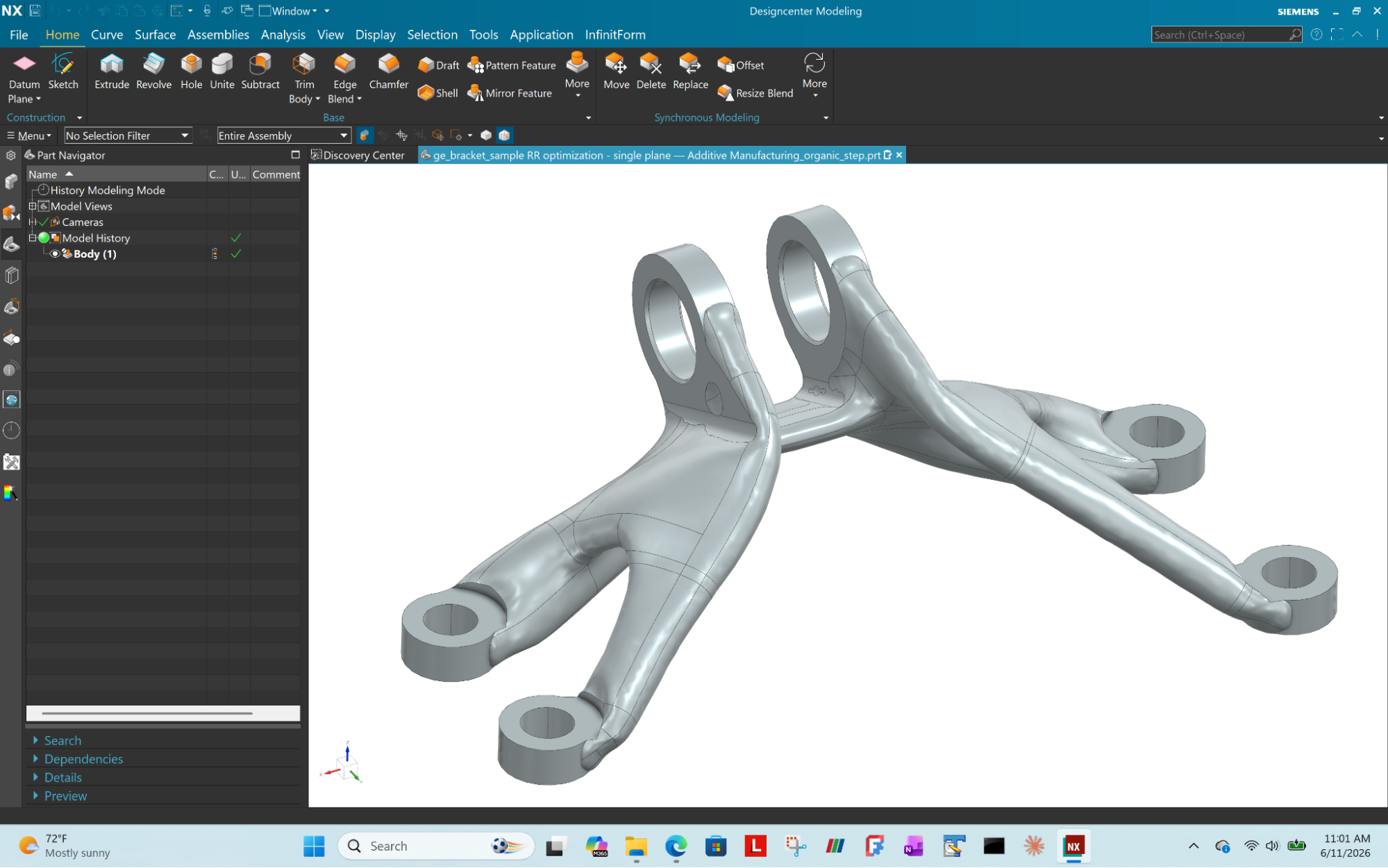
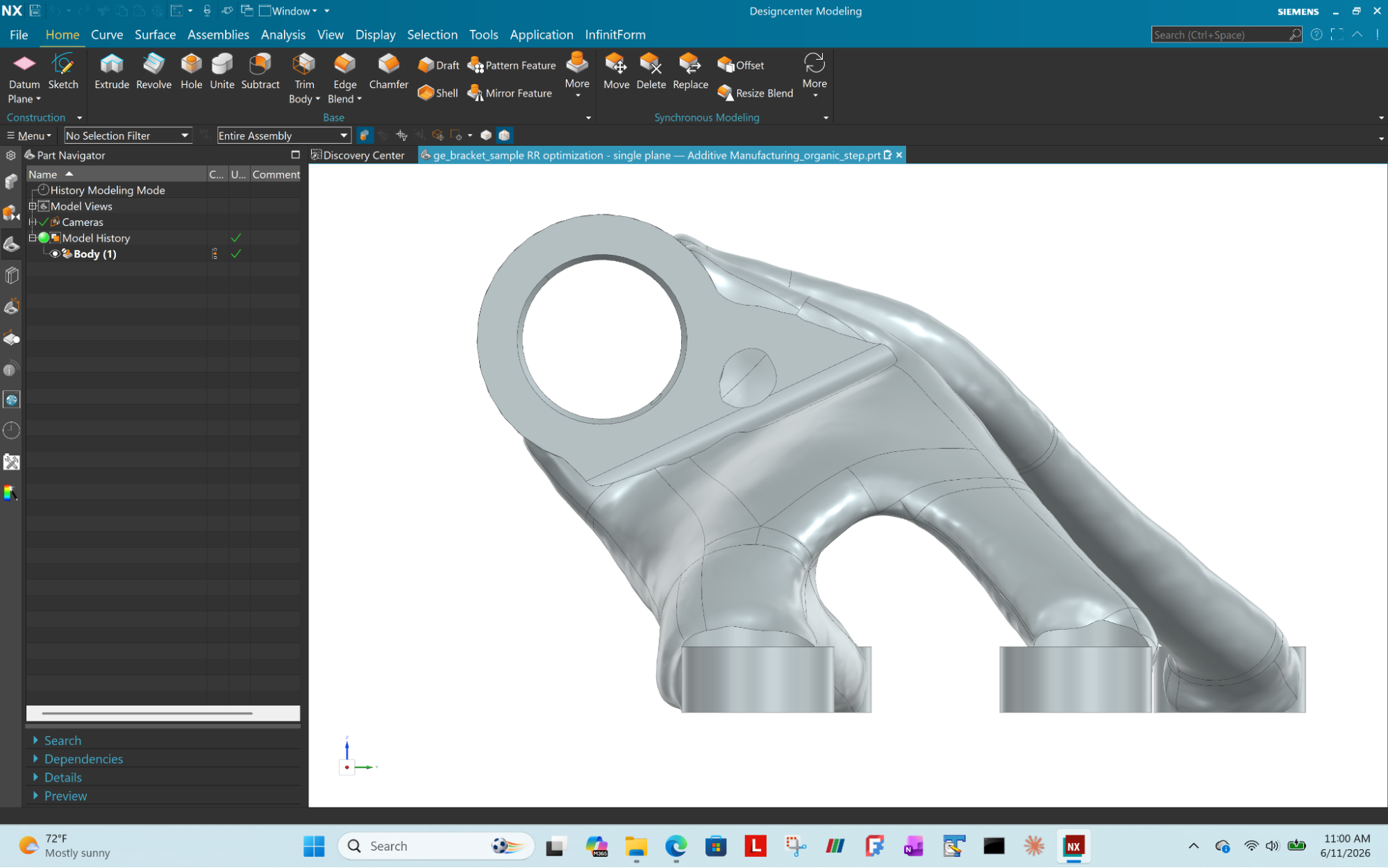
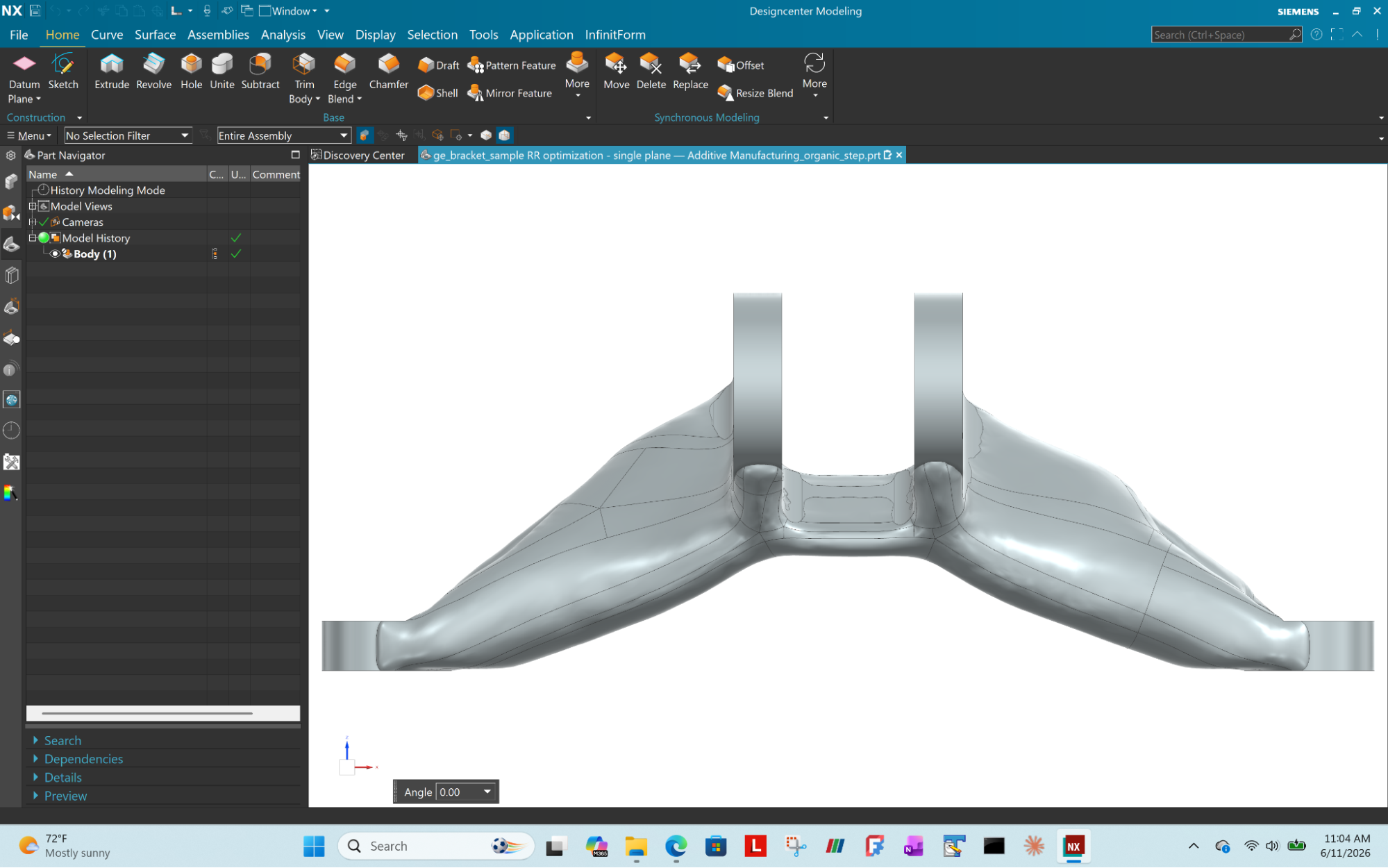
To address this, a dynamic topology optimization was performed using InfinitForm. By incorporating RMS Von mises stress constraints directly derived from the random response analysis using Segalman Method, the framework successfully optimized the bracket (Fig. 2). The final optimized design not only satisfies all yield stress requirements under dynamic loading but also achieves significant mass reduction (30% lighter than the design optimized with static analysis requirement only). Fig 3 shows the optimized design imported into Siemens NX CAD system.
Parametric CAD for the design considering CNC Milling manufacturing method with Random Response analysis.
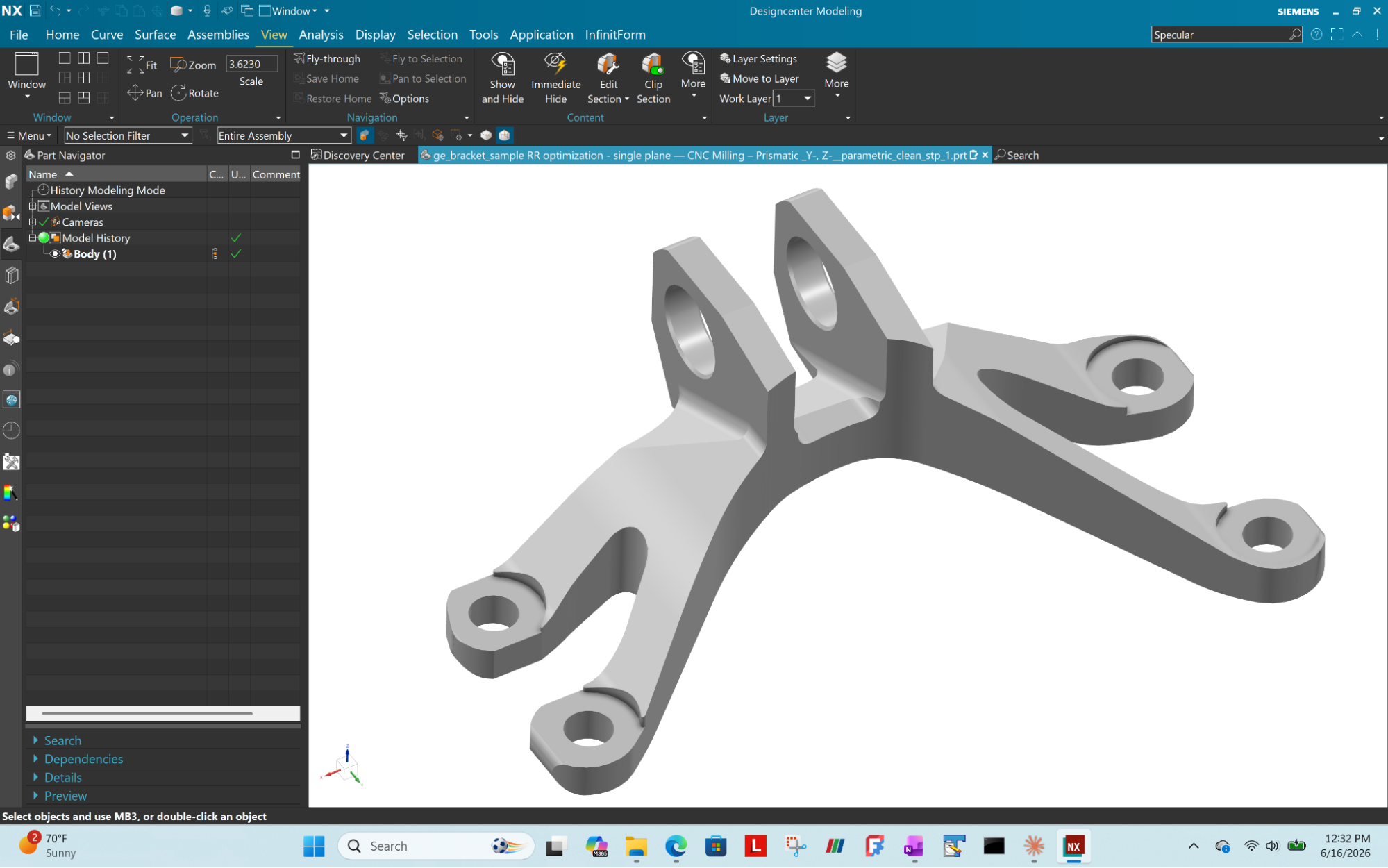
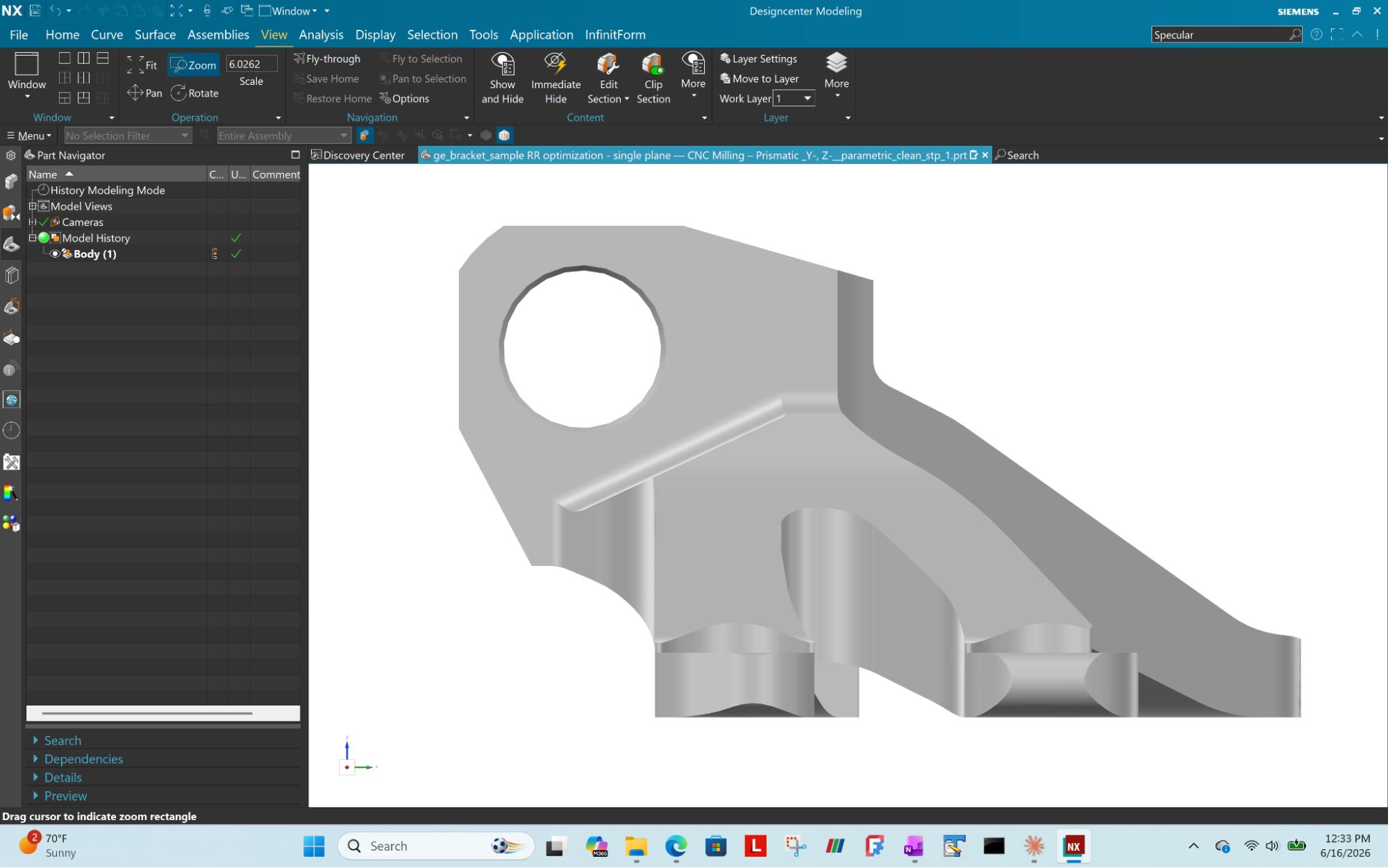
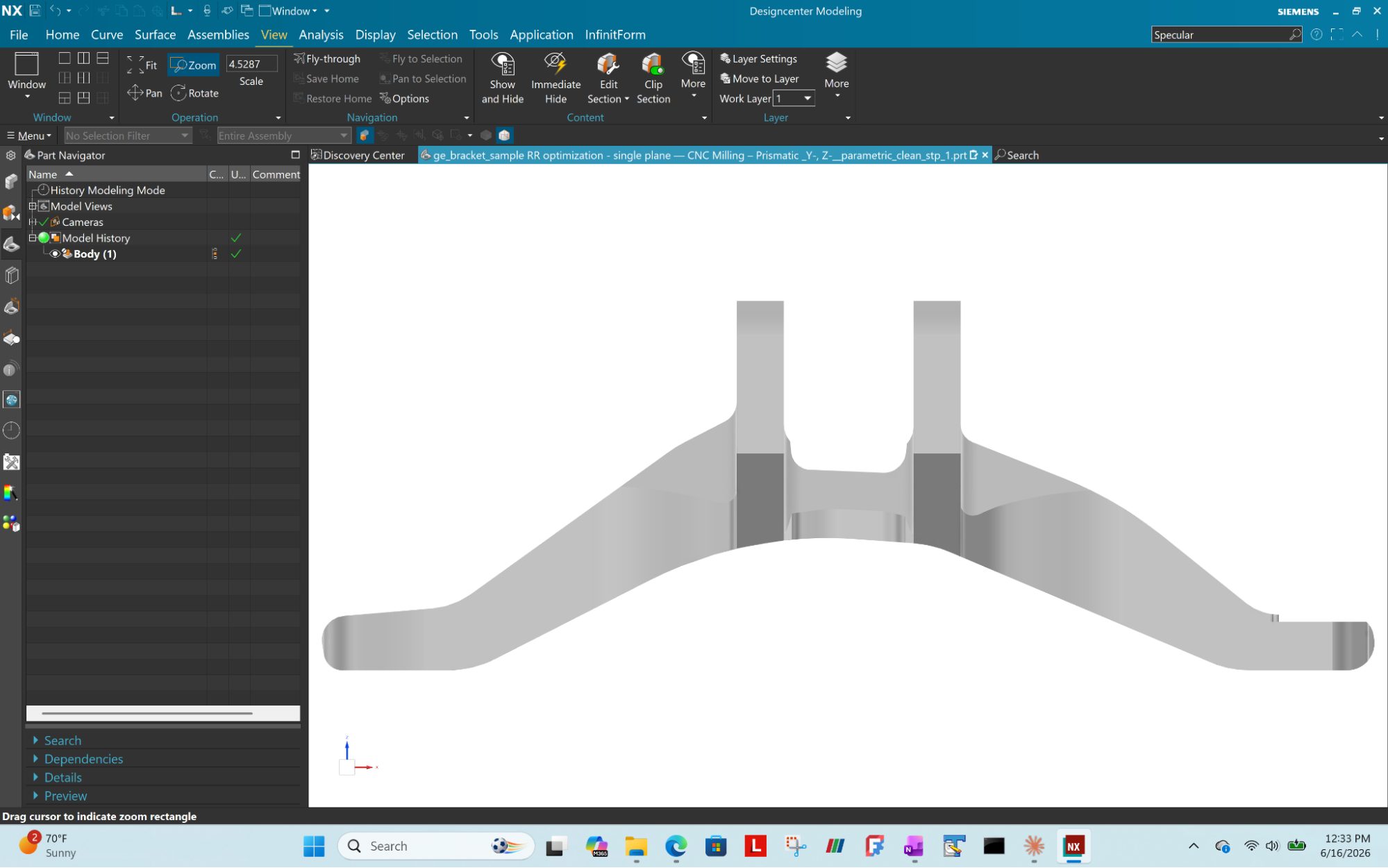
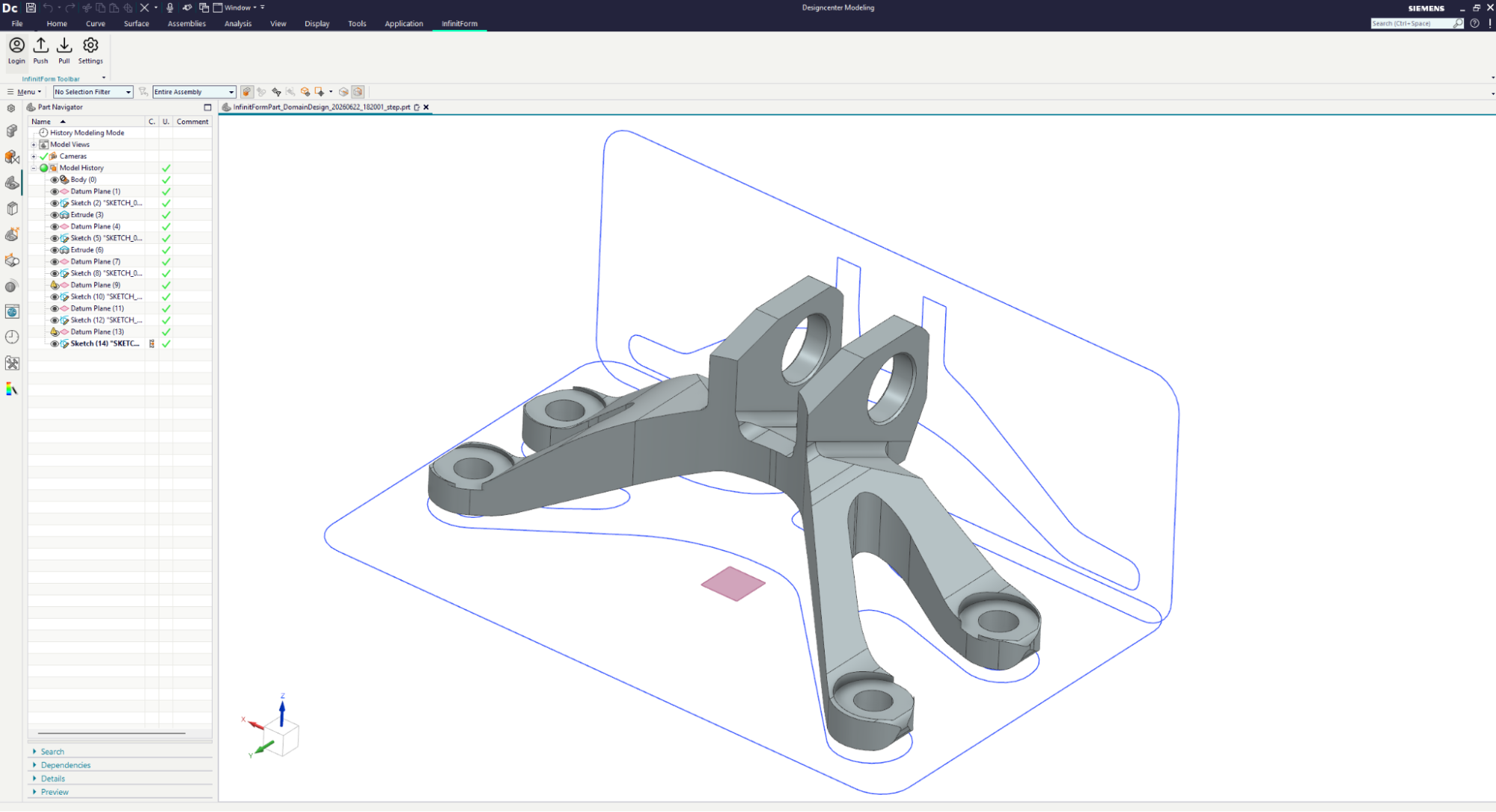
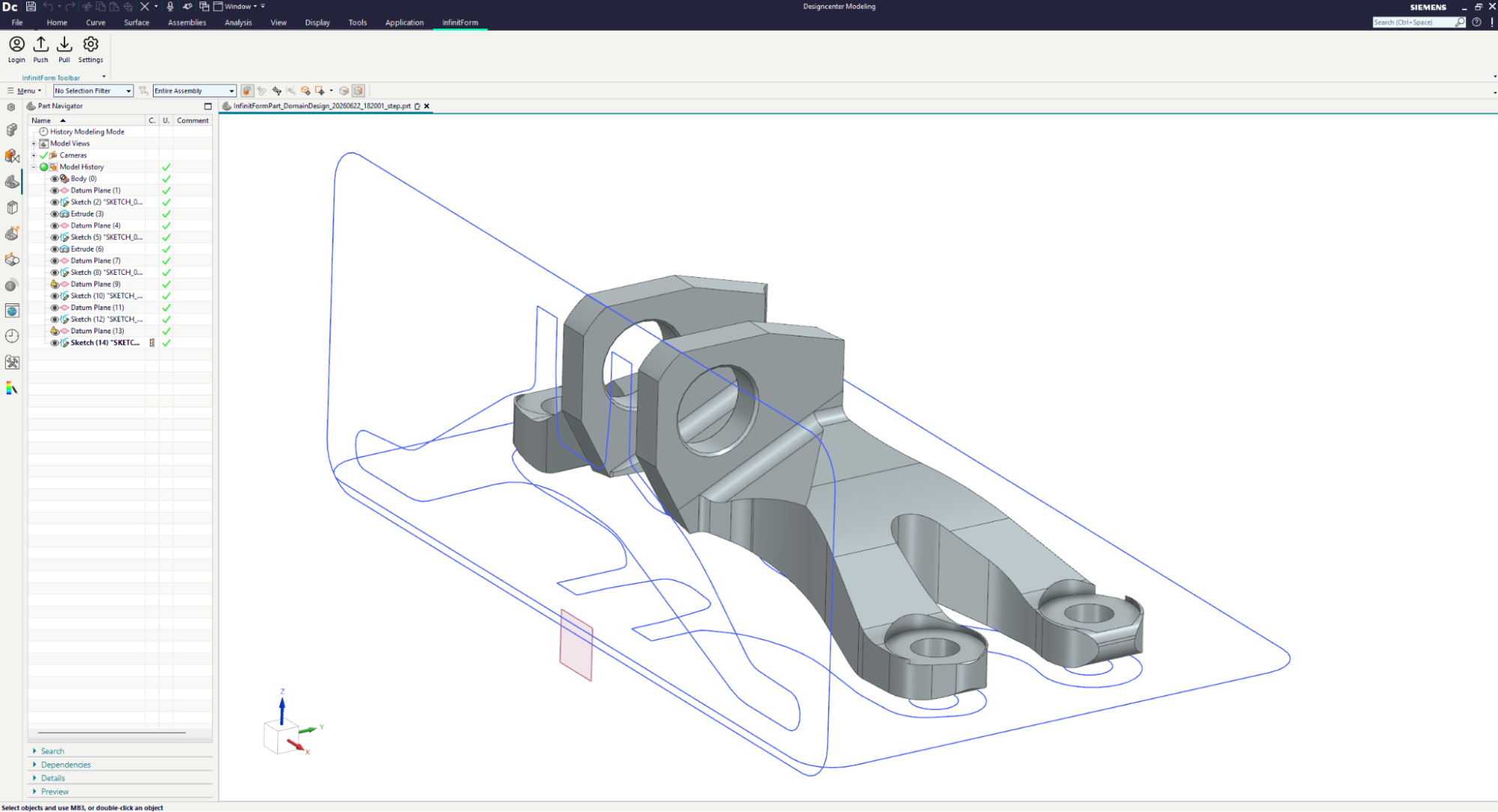
Infinitform can optimize for various manufacturing methods and we re-designed the same components for CNC milling manufacturing method (Fig 4). One of the very powerful functionalities in Infinitform is that it automatically creates sketches and its full feature tree which can be imported into commercial CAD softwares such as NX, CATIA, SolidWorks, Fusion360. See Fig 5.
The InfinitForm Advantage: Precision Meets Manufacturability
Infinitform changes the design paradigm by placing both FRF and Random Response analysis at the core of the optimization loop. Rather than iterating blindly, Infinitform uses high-fidelity simulation to determine exactly how every gram of material contributes to dynamic resilience.
However, a mathematically ideal shape is only valuable if it can actually be produced. Infinitform bridges the gap between simulation and the shop floor:
- Rigorous Mathematical programming driven design: Whether you are mitigating steady-state harmonic excitation (FRF) or broadband random vibrations, Infinitform's numerical optimization engines will find the optimum design that satisfies the performance constraints that the user imposes.
- Manufacturing-Aware Optimization: Infinitform understands that your parts will be milled, cast, or printed. It embeds strict manufacturing constraints, such as tool-path accessibility for 5-axis milling, minimum wall thicknesses, and draft angles, directly into the optimization process.
- Ready-to-Build Results: Instead of spending weeks manually "cleaning up" organic, simulation-optimized shapes, you receive a design that is performant, dynamically stable, and physically ready for CNC machining or other production methods in parametric CAD data.
Conclusion
In an era where every ounce of weight savings matters, you cannot afford to guess how your parts will handle the dynamic reality of the road or the sky. By directly optimizing for Frequency Response and Random response, you shift your design process from a guessing game to a precise engineering science. With Infinitform, you gain the ability to master dynamic environments without sacrificing the manufacturability that keeps your production lines moving.